The Nikon Z7 vs Z7II comparison reveals significant upgrades in the newer model. While both cameras share excellent image quality and robust build, the Z7II offers improved autofocus, dual processors, and enhanced video capabilities. This content explores their similarities, differences, and helps photographers decide which best suits their needs.
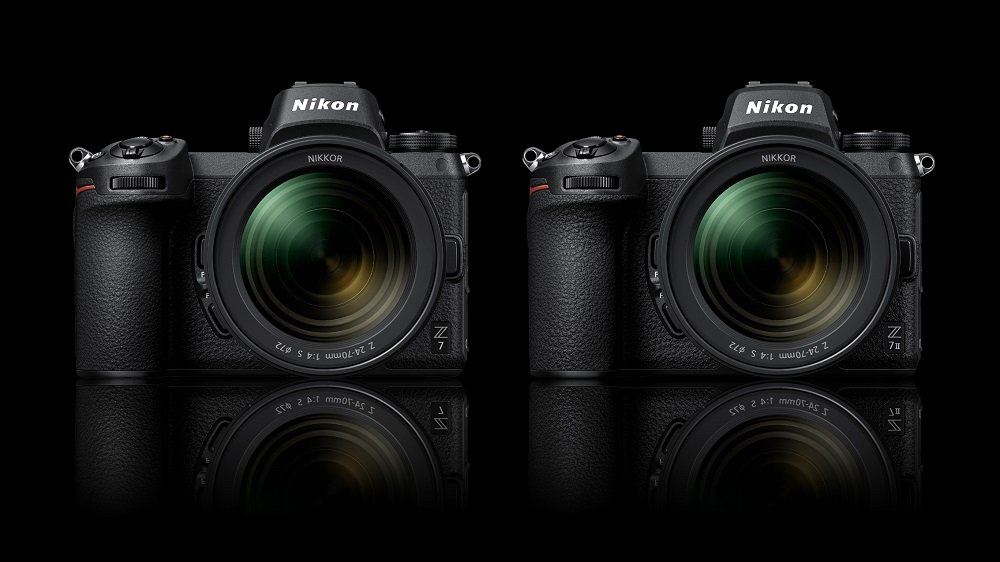
Nikon Z7 vs Z7II Side by Side Comparison
| Feature | Nikon Z7 | Nikon Z7II |
| Sensor | 45.7MP Full-Frame BSI CMOS | 45.7MP Full-Frame BSI CMOS |
| Image Processor | EXPEED 6 | Dual EXPEED 6 |
| Autofocus Points | 493 | 493 |
| Continuous Shooting | 9 fps | 10 fps |
| Buffer Capacity | 23 RAW, 25 JPEG | 77 RAW, 200 JPEG |
| ISO Range | 64-25,600 (exp. 32-102,400) | 64-25,600 (exp. 32-102,400) |
| Video Resolution | 4K/30p, 1080/120p | 4K/60p, 1080/120p |
| Memory Card Slots | 1 XQD/CFexpress | 1 CFexpress/XQD, 1 SD UHS-II |
| EVF Resolution | 3.69M-dot OLED | 3.69M-dot OLED |
| LCD Screen | 3.2″ 2.1M-dot tilting | 3.2″ 2.1M-dot tilting |
| Battery Life (CIPA) | 330 shots | 360 shots |
| Vertical Grip Support | No | Yes (MB-N11) |
| USB Power Delivery | No | Yes |
| Weight | 675g | 705g |
| Dimensions | 134 x 101 x 68mm | 134 x 101 x 70mm |
| Price | Check Nikon Z7 Price | Check Nikon Z7II Price |
Why Do I Recommend Nikon Z7II
While both the Nikon Z7 and Z7II are excellent cameras, there are several compelling reasons why I recommend the Z7II for most users:
- Improved Autofocus System: The Z7II features an enhanced autofocus system with better tracking and low-light performance, making it more reliable for capturing fast-moving subjects and in challenging lighting conditions.
- Dual EXPEED 6 Processors: This upgrade significantly boosts the camera’s overall performance, allowing for faster image processing, reduced buffer clearing times, and improved continuous shooting capabilities.
- Enhanced Video Capabilities: The Z7II offers 4K/60p video recording, providing smoother footage for slow-motion effects and better overall video quality.
- Dual Memory Card Slots: Unlike the Z7, the Z7II features two card slots (one CFexpress/XQD and one UHS-II SD), offering more flexibility and peace of mind for critical shoots.
- Increased Buffer Capacity: The Z7II can capture more images in a single burst, making it better suited for action and sports photography.
- Vertical Grip Support: The Z7II is compatible with the optional MB-N11 battery grip, which improves handling for vertical shooting and extends battery life.
- USB Power Delivery: The Z7II can be powered and charged via its USB-C port, enhancing its versatility for long shoots or time-lapse photography.
- Firmware Updateability: Nikon has shown a commitment to improving the Z7II through firmware updates, potentially adding new features and capabilities over time.
- Future-Proofing: As the newer model, the Z7II is likely to receive support and updates for a longer period, ensuring it remains relevant for years to come.
- Minimal Price Difference: Considering the improvements, the price difference between the Z7 and Z7II is often minimal, especially when factoring in promotions or bundle deals.
Similarities Between Nikon Z7 vs Z7II
| Feature | Nikon Z7 | Nikon Z7II |
| Sensor Resolution | 45.7MP | 45.7MP |
| IBIS Effectiveness | Up to 5 stops | Up to 5 stops |
| Weather Sealing | Extensive | Extensive |
| EVF Resolution | 3.69M-dot | 3.69M-dot |
| LCD Screen | 3.2″ 2.1M-dot | 3.2″ 2.1M-dot |
| 4K Video Capability | Yes | Yes |
| 10-bit N-Log | Yes | Yes |
| Wi-Fi and Bluetooth | Yes | Yes |
| F-Mount Lens Compatibility | Yes (w/ FTZ) | Yes (w/ FTZ) |
| Silent Shooting Mode | Yes | Yes |
| Focus Stacking | Yes | Yes |
| Time-Lapse Movie Mode | Yes | Yes |
| Price | Check Nikon Z7 Price | Check Nikon Z7II Price |
What Can Both Do?
Despite their differences, both the Nikon Z7 and Z7II share a strong foundation of features and capabilities:
- High-Resolution Imaging: Both cameras utilize the same 45.7MP full-frame BSI CMOS sensor, delivering exceptional detail and dynamic range.
- In-Body Image Stabilization (IBIS): The 5-axis IBIS system provides up to 5 stops of shake reduction with native Z-mount lenses.
- Robust Weather Sealing: Both models feature extensive weather sealing, making them suitable for use in challenging environments.
- Ergonomic Design: The cameras share a similar body design with comfortable grip and intuitive control layout.
- High-Resolution EVF: Both feature a 3.69M-dot OLED electronic viewfinder for clear and lag-free composition.
- Tilting Touchscreen: The 3.2″ 2.1M-dot tilting LCD allows for flexible shooting angles and easy menu navigation.
- 4K Video Recording: Both cameras can capture 4K UHD video, though the Z7II offers higher frame rates.
- 10-bit N-Log: This feature allows for greater flexibility in color grading for video work.
- Focus Peaking and Zebra Stripes: These tools assist in achieving precise manual focus and proper exposure.
- Time-Lapse Movie Mode: Both cameras offer built-in intervalometer functionality for creating time-lapse sequences.
- Wi-Fi and Bluetooth Connectivity: Wireless image transfer and remote control are possible with both models.
- Compatibility with F-Mount Lenses: Using the FTZ adapter, both cameras can utilize Nikon’s extensive lineup of F-mount lenses.
- Silent Shooting Mode: This feature allows for discreet photography in noise-sensitive environments.
- Focus Stacking: Both cameras support in-camera focus stacking for increased depth of field in close-up photography.
- Multiple Exposure Mode: This creative feature allows for the combination of multiple exposures into a single image.
Now, let’s dive deeper into the various aspects of these cameras to help you understand their capabilities and differences more thoroughly.
Image Quality and Sensor Performance: Both the Nikon Z7 and Z7II feature the same 45.7MP full-frame BSI CMOS sensor, which is a testament to the excellence of the original Z7’s imaging capabilities. This high-resolution sensor delivers exceptional detail, allowing for large prints and significant cropping flexibility. The back-illuminated design contributes to improved low-light performance and reduced noise at higher ISO settings.
The base ISO range of 64-25,600 (expandable to 32-102,400) is identical in both models, offering great versatility in various lighting conditions. The low base ISO of 64 is particularly useful for landscape and studio photographers who prioritize maximum image quality and dynamic range.
While the core image quality remains the same between the two models, the Z7II’s dual EXPEED 6 processors allow for faster image processing and improved JPEG output. This can result in slightly better color rendition and noise reduction in JPEG files straight out of the camera.
Autofocus System: One of the most significant improvements in the Z7II is its enhanced autofocus system. While both cameras feature 493 AF points covering approximately 90% of the frame, the Z7II benefits from improved algorithms and processing power.
The Z7II offers better low-light autofocus performance, able to focus down to -3 EV compared to the Z7’s -2 EV. This improvement is particularly noticeable when shooting in dimly lit environments or capturing night scenes.
Subject tracking has also been enhanced in the Z7II, with improved accuracy and reliability when following moving subjects. This makes the Z7II a more capable tool for action, sports, and wildlife photography.
The Z7II also introduces eye-detection autofocus for animals, a feature absent in the original Z7. This can be a game-changer for wildlife and pet photographers, allowing for easier composition and more consistent focus on animal subjects.
Continuous Shooting and Buffer: While the difference in maximum continuous shooting speed is minimal (9 fps for the Z7 vs. 10 fps for the Z7II), the real improvement lies in the buffer capacity. The Z7II can capture up to 77 12-bit RAW files or 200 JPEGs in a single burst, compared to the Z7’s 23 RAW or 25 JPEG images.
This substantial increase in buffer capacity makes the Z7II much more suitable for action and sports photography, allowing for longer bursts without interruption. The dual processors in the Z7II also contribute to faster buffer clearing times, reducing the wait between bursts.
Video Capabilities: Both cameras are capable video tools, but the Z7II takes things a step further. The most notable upgrade is the ability to shoot 4K video at 60 frames per second, compared to the Z7’s maximum of 30 fps at 4K. This higher frame rate allows for smoother motion and the option to create slow-motion footage in post-processing.
The Z7II also offers the ability to output 10-bit 4:2:2 N-Log footage via HDMI, providing greater flexibility in color grading. While the Z7 can output 10-bit, it’s limited to 8-bit internally.
Both cameras feature focus peaking, zebra stripes, and timecode support, making them suitable for professional video production. However, the Z7II’s dual processors allow for better heat management during extended video recording sessions.
Memory Card Slots and Storage: One of the most requested features addressed in the Z7II is the addition of a second memory card slot. While the Z7 has a single XQD/CFexpress slot, the Z7II features both a CFexpress/XQD slot and a UHS-II SD card slot.
This dual-slot configuration offers several advantages:
- Backup: You can simultaneously record to both cards for instant backup.
- Overflow: When one card fills up, the camera can automatically switch to the second card.
- Separation: You can save RAW files to one card and JPEGs to the other, or separate still images and video files.
The inclusion of an SD card slot also makes the Z7II more accessible for photographers who already have a collection of SD cards from previous cameras.
Battery Life and Power Options: The Z7II sees a modest improvement in battery life, rated at 360 shots per charge compared to the Z7’s 330 shots (according to CIPA standards). In real-world use, both cameras typically exceed these ratings, especially when using power-saving features.
A significant advantage of the Z7II is its ability to be powered and charged via its USB-C port. This feature is particularly useful for long shooting sessions, time-lapse photography, or when working in remote locations where access to power outlets is limited.
Additionally, the Z7II is compatible with the MB-N11 battery grip, which not only extends battery life but also improves ergonomics for vertical shooting. The Z7, in contrast, does not support a vertical grip with controls.
Build Quality and Ergonomics: Both the Z7 and Z7II share a similar body design, characterized by robust construction and extensive weather sealing. The magnesium alloy body provides durability without excessive weight, making both cameras suitable for professional use in challenging environments.
The control layout is largely identical between the two models, with a comfortable grip, well-placed buttons, and customizable function buttons. The Z7II is slightly deeper (70mm vs. 68mm) and heavier (705g vs. 675g) than the Z7, but these differences are negligible in practical use.
Both cameras feature a 3.2-inch tilting touchscreen LCD with 2.1 million dots, providing a clear view for image review and live view shooting. The electronic viewfinder in both models is a high-resolution 3.69M-dot OLED display, offering a large, bright, and detailed view for composition.
Lens Compatibility and Ecosystem: One of the strengths of both the Z7 and Z7II is their compatibility with Nikon’s growing lineup of Z-mount lenses. These new lenses take advantage of the wider mount diameter and shorter flange distance to deliver exceptional optical performance.
Both cameras are also fully compatible with Nikon’s vast collection of F-mount lenses via the FTZ adapter. This backward compatibility ensures that photographers investing in the Z system can continue to use their existing Nikon lenses while gradually transitioning to native Z-mount glass.
Since the release of the original Z7, Nikon has significantly expanded its Z-mount lens lineup, offering more choices for Z7II users. However, both cameras benefit from this growing ecosystem.
Software and Firmware Updates: Nikon has shown a commitment to improving its Z series cameras through firmware updates. The Z7 has received several updates since its release, adding features like CFexpress card support and improved autofocus performance.
The Z7II, being a newer model, is likely to receive more extensive firmware updates in the future. This could potentially add new features or further improve existing ones, enhancing the camera’s longevity and value.
Price and Value Proposition: At launch, the Z7II was priced slightly higher than the Z7. However, as time has passed, the price difference between the two models has often narrowed, especially when considering promotional offers or bundle deals.
Given the numerous improvements in the Z7II, particularly in autofocus performance, buffer capacity, and video capabilities, it generally represents better value for most photographers. However, if these specific enhancements aren’t crucial to your work, the Z7 remains an excellent camera that can often be found at attractive prices on the secondary market.
FAQS About the Nikon Z7 vs Z7II
How does the Z7II’s dual EXPEED 6 processor affect JPEG color rendition compared to the Z7?
The dual processors in the Z7II allow for more sophisticated in-camera processing, resulting in slightly improved color accuracy and nuance in JPEG files straight out of camera.
Can the Z7 be upgraded to support the MB-N11 battery grip through firmware?
No, the Z7 cannot be upgraded to support the MB-N11 battery grip. This is a hardware limitation and not something that can be addressed through firmware.
Does the Z7II’s improved buffer capacity affect long exposure noise reduction processing time?
While the Z7II’s improved buffer doesn’t directly affect long exposure noise reduction, the dual processors allow for faster overall image processing, which can slightly reduce the time needed for noise reduction in long exposures.
How does the Z7II’s animal eye-detection AF perform with non-mammalian subjects like birds or reptiles?
The Z7II’s animal eye-detection AF works best with mammals but can also detect eyes of birds in many cases. It may struggle with reptiles or other animals with less prominent eyes.
Can the Z7 and Z7II use different color profiles in their respective smartphone companion apps?
Both cameras use the same Nikon SnapBridge app, which offers identical color profile options for both models. The Z7II doesn’t have exclusive color profiles in the app.
Does the Z7II’s USB power delivery feature work with all USB-C power banks?
The Z7II’s USB power delivery works with most USB-C power banks that support the Power Delivery (PD) protocol. However, some older or non-PD power banks may not be compatible.
How does the Z7II’s dual card slot affect startup time compared to the Z7?
The Z7II’s startup time is virtually identical to the Z7 despite the additional card slot. Any difference is negligible in real-world use.
Can the Z7 and Z7II use different wireless flash triggering systems?
Both cameras are compatible with the same Nikon wireless flash systems. The Z7II doesn’t offer any exclusive compatibility in this regard.
Does the Z7II’s improved processing power allow for more complex in-camera multiple exposure options?
While the Z7II has more processing power, both cameras offer the same multiple exposure options. The Z7II may process these faster, but it doesn’t provide additional creative modes.
How does the Z7II’s dual processor setup impact battery life when shooting exclusively in RAW format?
When shooting exclusively in RAW, the Z7II’s battery life is similar to the Z7. The dual processors’ efficiency largely offsets their increased power draw, resulting in comparable battery performance for RAW shooting.
Conclusion
The Nikon Z7 vs Z7II comparison reveals that while both cameras share a strong foundation, the Z7II offers several meaningful improvements that enhance its versatility and performance.
The original Z7 remains a highly capable camera, particularly for landscape, studio, and fine art photographers who prioritize image quality and resolution. Its robust build, excellent sensor, and compatibility with both Z and F-mount lenses make it a solid choice, especially if found at a competitive price.
The Z7II, however, takes things to the next level. Its improved autofocus system, enhanced buffer capacity, dual card slots, and advanced video capabilities make it a more well-rounded tool suitable for a broader range of photographic disciplines. The addition of features like USB power delivery and vertical grip support further enhance its appeal to working professionals.
Nikon Z7 vs Z7 II – Which Is Best & Why?
Nikon Z7 vs Z7 II – Recommend Nikon Z7 II
Choosing between the Nikon Z7 and the refreshed Nikon Z7 II means deciding whether you want a high-resolution full-frame that’s already excellent—or one that takes the experience further with improved speed, modern workflow and future-ready features. Both cameras deliver stunning image quality, but the edge goes to one that fits the way you shoot and invest.
Let’s make long story short
Go for the Nikon Z7 II—it’s a smart, future‑proof upgrade with dual processors, better performance, dual card slots and enhanced video support. If you’re serious about stills and video over the next few years, this is the one that keeps up with your ambition.
✅ Why Do I Recommend the Nikon Z7 II?
As a world‑class seller would tell a savvy buyer: this is where professional readiness meets value.
- ✅ Dual EXPEED 6 processors—massively improved buffer, faster performance and smoother workflow.
- ✅ 10 fps continuous shooting and improved Eye/Animal AF for stills and video.
- ✅ 4K video at 60p, N‑Log 10‑bit HDMI out—making it solid for hybrid shooters.
- ✅ Dual card slots (CFexpress/XQD + SD UHS‑II)—serious durability and workflow for pros.
- ✅ Price drops and deals make it a strong purchase right now, offering more headroom for content creation and professional use.
👉 If you buy one full‑frame Nikon now and expect to rely on it, the Z7 II makes the difference. Let’s get you locked in.
🔍 Detailed Comparison & Recommendation
| Feature | Nikon Z7 II | Nikon Z7 | Which Is Best & Why? |
|---|---|---|---|
| Processor | ✅ Dual EXPEED 6 | ❌ Single EXPEED 6 | ✅ Z7 II wins for speed and workflow. |
| Continuous Shooting & Buffer | ✅ 10 fps and larger buffer | ❌ 9 fps, smaller buffer | ✅ Z7 II gives better action‑shooting headroom. |
| Video Capabilities | ✅ 4K/60p, 10‑bit HDMI out | ❌ 4K/30p only | ✅ Z7 II wins for hybrid shooters. |
| Card Slots | ✅ Dual card slots (CFexpress/XQD + SD) | ❌ Single slot (CFexpress/XQD) | ✅ Z7 II better for professional reliability. |
| Core Sensor & Image Quality | ✅ 45.7MP same sensor, so image quality is equal | ✅ Same base sensor | — Quality is comparable; value lies in the enhancements. |
| Price & Value | ❌ Slight premium over Z7 | ✅ Better deal for pure resolution users | ✅ Z7 wins for budget‑conscious buyers who accept fewer features. |
What Is the Major Difference Between Nikon Z7 vs Z7 II?
- Performance Leadership: Z7 II brings dual processors, faster buffer, enhanced AF tracking and 4K/60p support—meaning it’s built for today’s hybrid content creators and professionals.
- Workflow & Reliability: With dual card slots and advanced connectivity, Z7 II offers pro‑level workflow features; Z7 still adds excellent image quality but lacks these enhancements.
- Value vs Future‑Proofing: If you need the highest resolution at the lowest possible cost and shoot mostly stills—the Z7 is still a strong camera. But if you demand better hybrid performance and workflow durability—the Z7 II is the smarter long‑term investment.
What Users Are Saying…
| Feature | Nikon Z7 II | Nikon Z7 |
|---|---|---|
| Hybrid performance & speed | “Upgraded AF and dual slots make a real‑world difference.” | “Excellent image quality but felt dated on video and workflow.” |
| Reliability & card slots | “Two card slots = peace of mind when shooting large jobs.” | “Single slot on Z7 kept me cautious for big shoots.” |
| Value & longevity | “Price drop + top specs = smart long‑term buy.” | “Got a deal; still a great camera if you don’t need 4K/60p.” |
Fair Advice to Consider
- ✅ Choose Nikon Z7 II if you shoot a mix of stills and video, need dual card slots, better AF, and want one camera that holds up for years.
- ❌ Choose Nikon Z7 if you’re mostly shooting high‑resolution stills, on a tighter budget, and don’t require advanced video or workflow features.
- ✅ Ensure lens investment: both use Z‑mount lenses—factor that into your total cost.
- ❌ Don’t pay Z7 II price if your use case is casual—Z7 might give better value in that scenario.
Quick Comparison
| Spec | Nikon Z7 II | Nikon Z7 |
|---|---|---|
| Sensor | ✅ 45.7MP | ✅ 45.7MP |
| Continuous Shooting | ✅ 10 fps | ❌ 9 fps |
| Video Capability | ✅ 4K/60p | ❌ 4K/30p |
| Card Slots | ✅ Dual Card Slots | ❌ Single Card Slot |
| Best For | ✅ Hybrid Pros | ✅ Still‑focused budget buyers |
| Winner | ✅ Nikon Z7 II |
Quick Summary
If you need a camera that delivers leading‑edge performance, hybrid capability and workflow readiness, then the Nikon Z7 II earns the win. The Nikon Z7 remains a strong high‑resolution stills camera but falls short when video, speed and future‑proofing matter.
FAQs
Q: Are Z‑mount lenses compatible on both?
A: Yes—both support Nikon Z‑mount lenses, so lens investment carries across.
Q: Will Z7 II give better video results?
A: Yes—4K/60p, dual card support and stronger AF make a noticeable difference.
Q: Is the difference worth the price upgrade?
A: If you shoot hybrid content, yes—otherwise the original Z7 still delivers excellent results.
Q: Will the Z7 II perform in a professional shoot?
A: Absolutely—pro features like dual slots and longer buffer make it fit for serious use.
Q: Should I wait for a Z7 III?
A: Possibly—but if you need a high‑end full‑frame now, the Z7 II is a smart investment today.
Final Verdict
When it’s time to really invest in your craft, reach for the Nikon Z7 II—the camera built not for yesterday, but for the demands of today and tomorrow. The Nikon Z7 remains an excellent performer, especially for stills‑centric shooters on a budget—but for all‑round, durable, professional capability, the Z7 II is the winner. Secure your gear smartly and start creating at the next level.
Jump To
- Nikon Z7 vs Z7II Side by Side Comparison
- Why Do I Recommend Nikon Z7II
- Similarities Between Nikon Z7 vs Z7II
- What Can Both Do?
- How does the Z7II’s dual EXPEED 6 processor affect JPEG color rendition compared to the Z7?
- Can the Z7 be upgraded to support the MB-N11 battery grip through firmware?
- Does the Z7II’s improved buffer capacity affect long exposure noise reduction processing time?
- How does the Z7II’s animal eye-detection AF perform with non-mammalian subjects like birds or reptiles?
- Can the Z7 and Z7II use different color profiles in their respective smartphone companion apps?
- Does the Z7II’s USB power delivery feature work with all USB-C power banks?
- How does the Z7II’s dual card slot affect startup time compared to the Z7?
- Can the Z7 and Z7II use different wireless flash triggering systems?
- Does the Z7II’s improved processing power allow for more complex in-camera multiple exposure options?
- How does the Z7II’s dual processor setup impact battery life when shooting exclusively in RAW format?
- Nikon Z7 vs Z7 II – Which Is Best & Why?